MEET ME WHERE I AM



Project Description
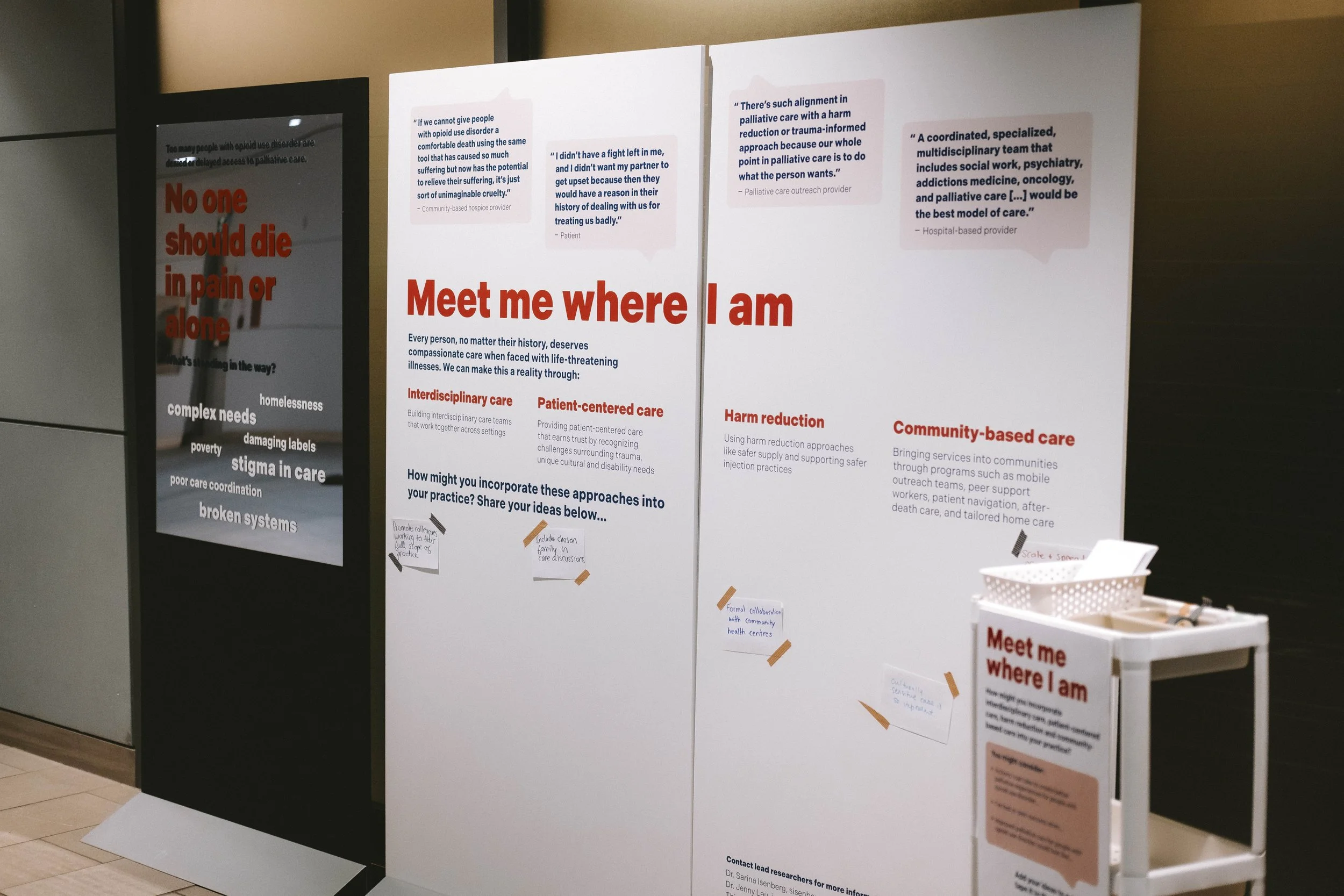
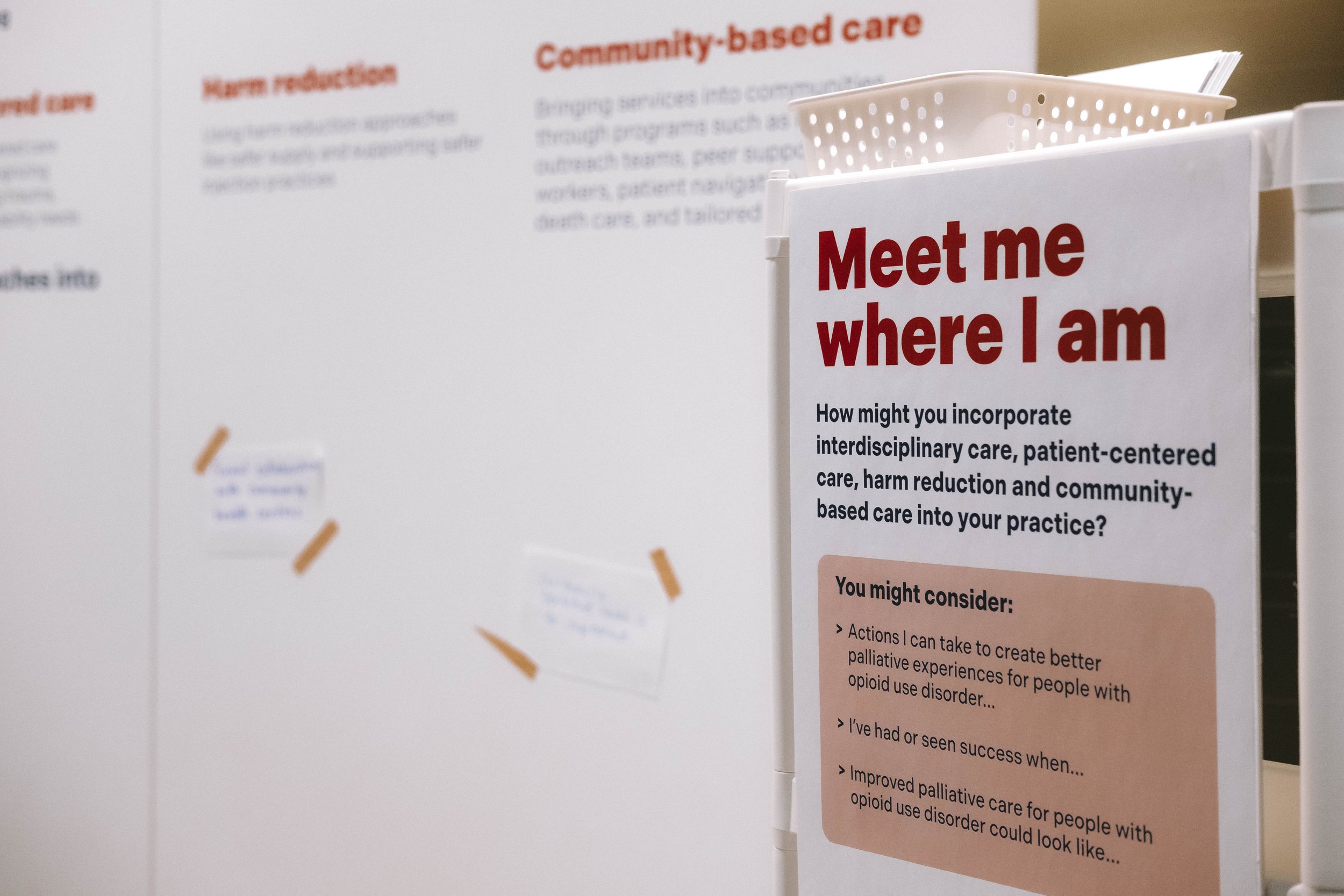
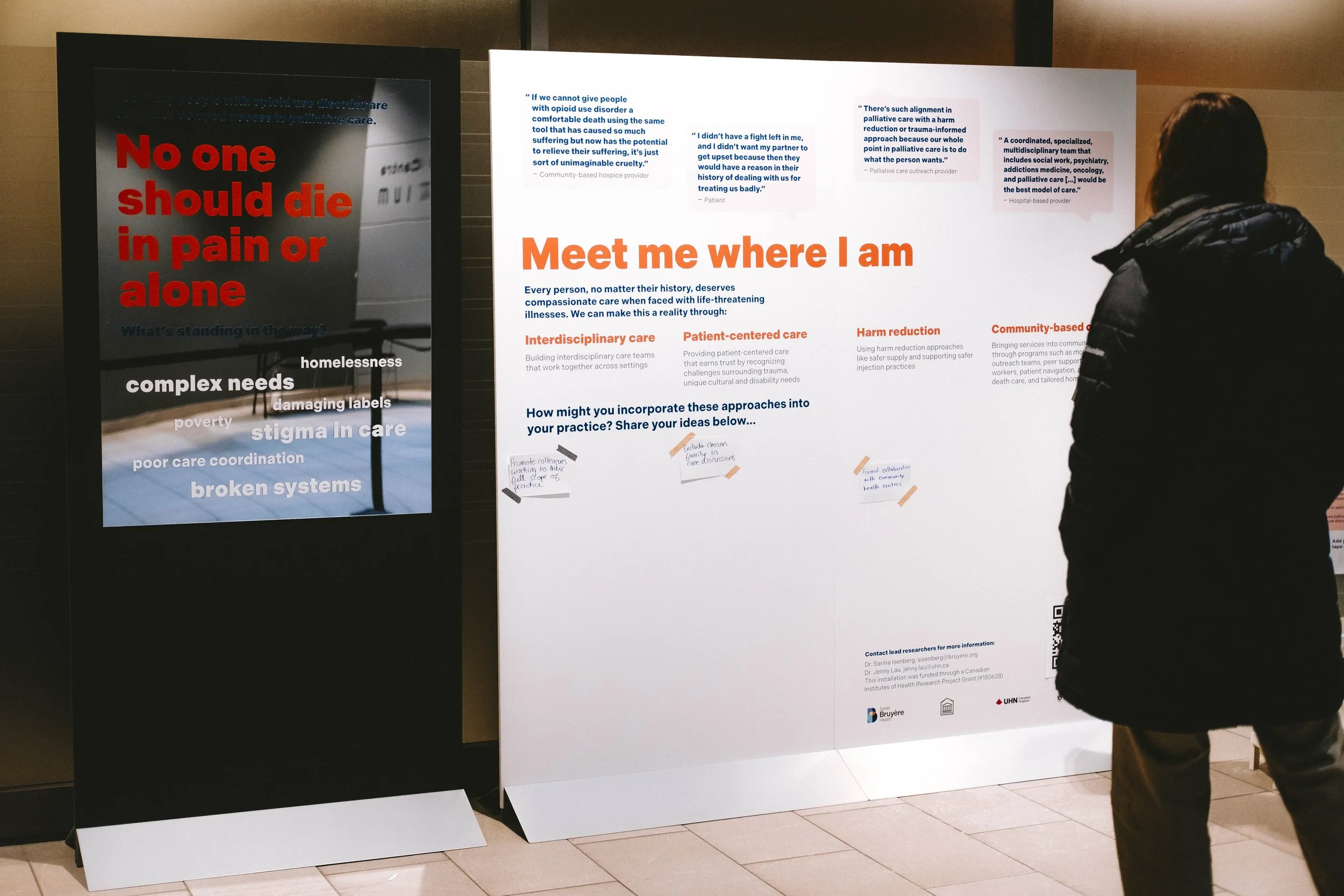
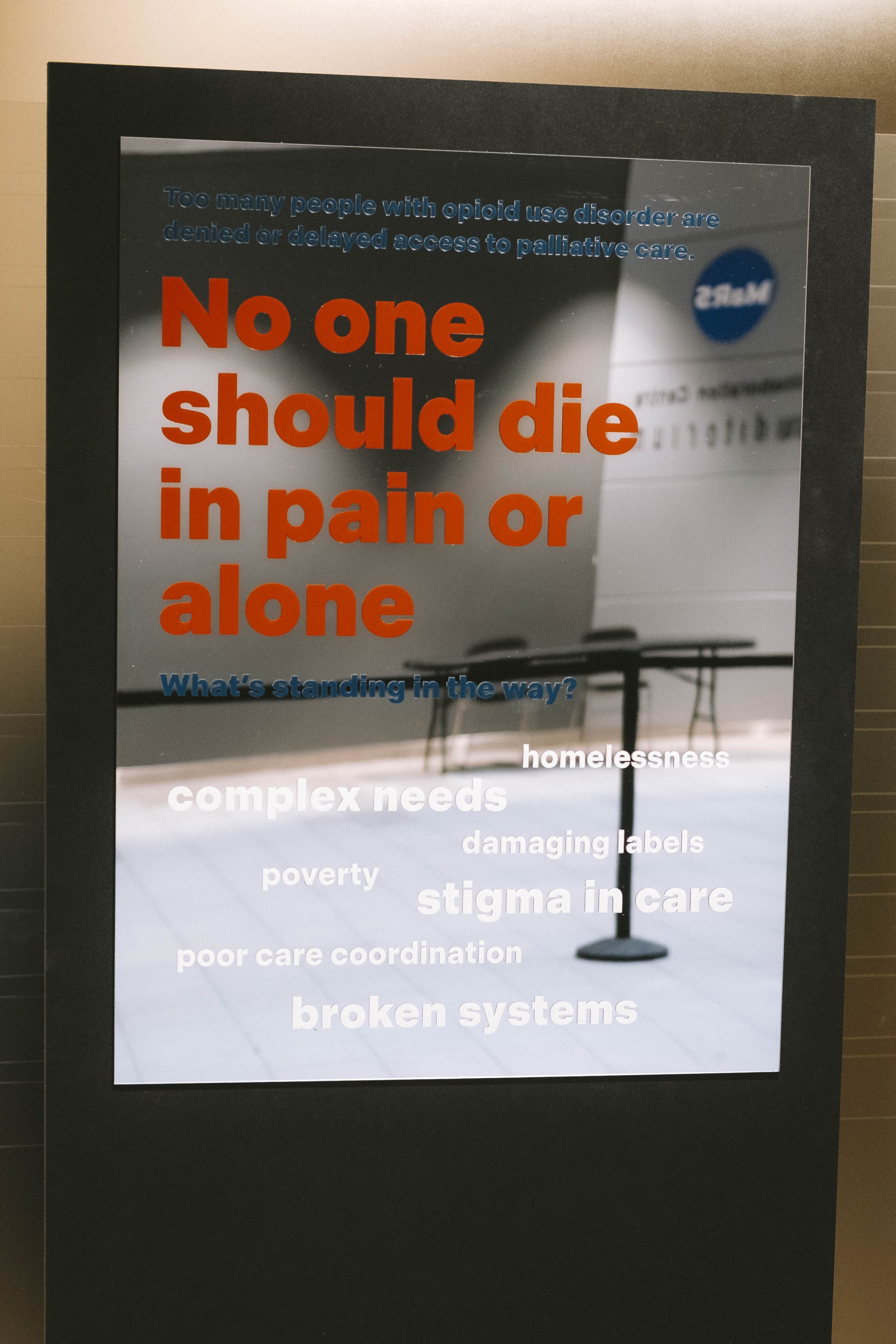
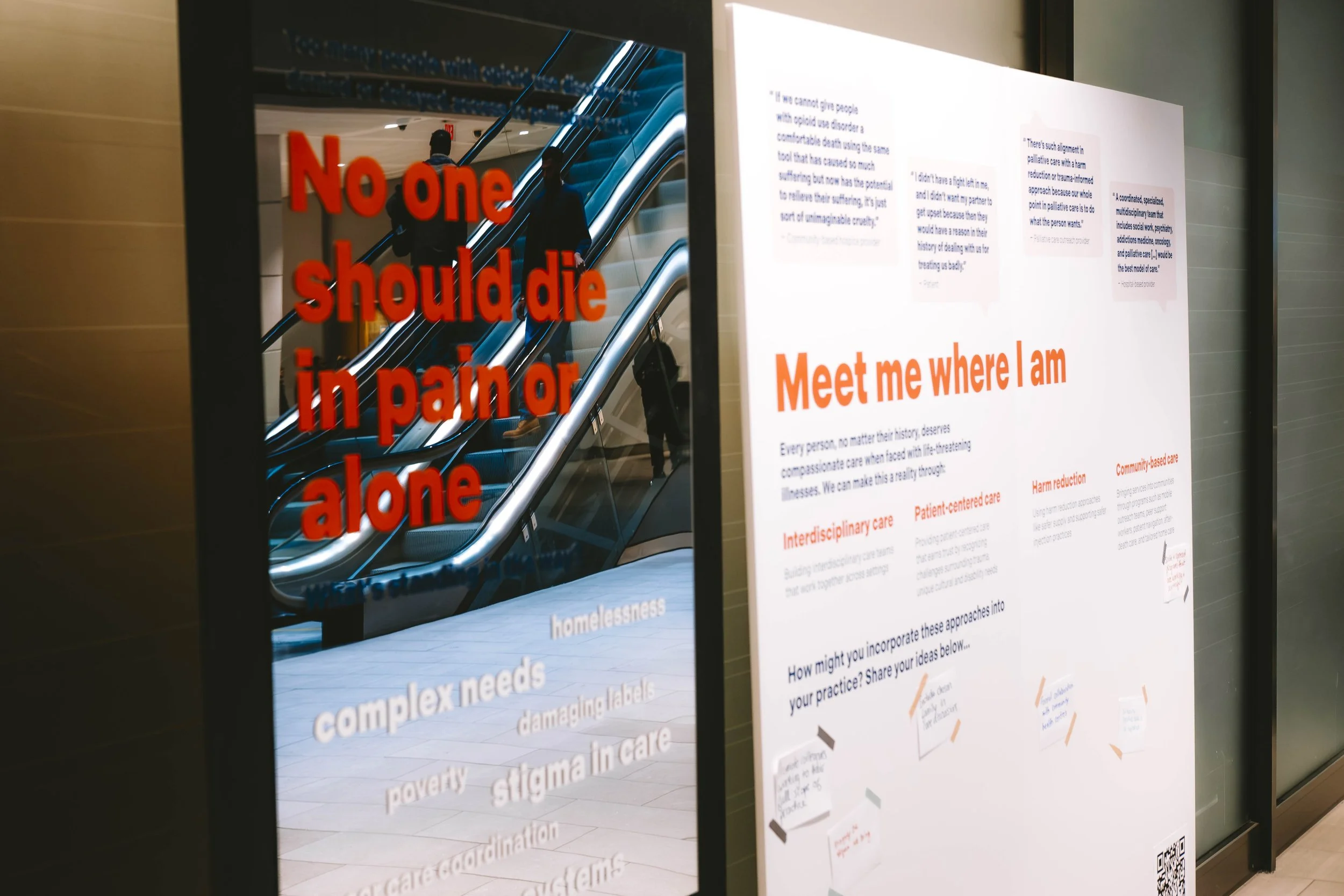
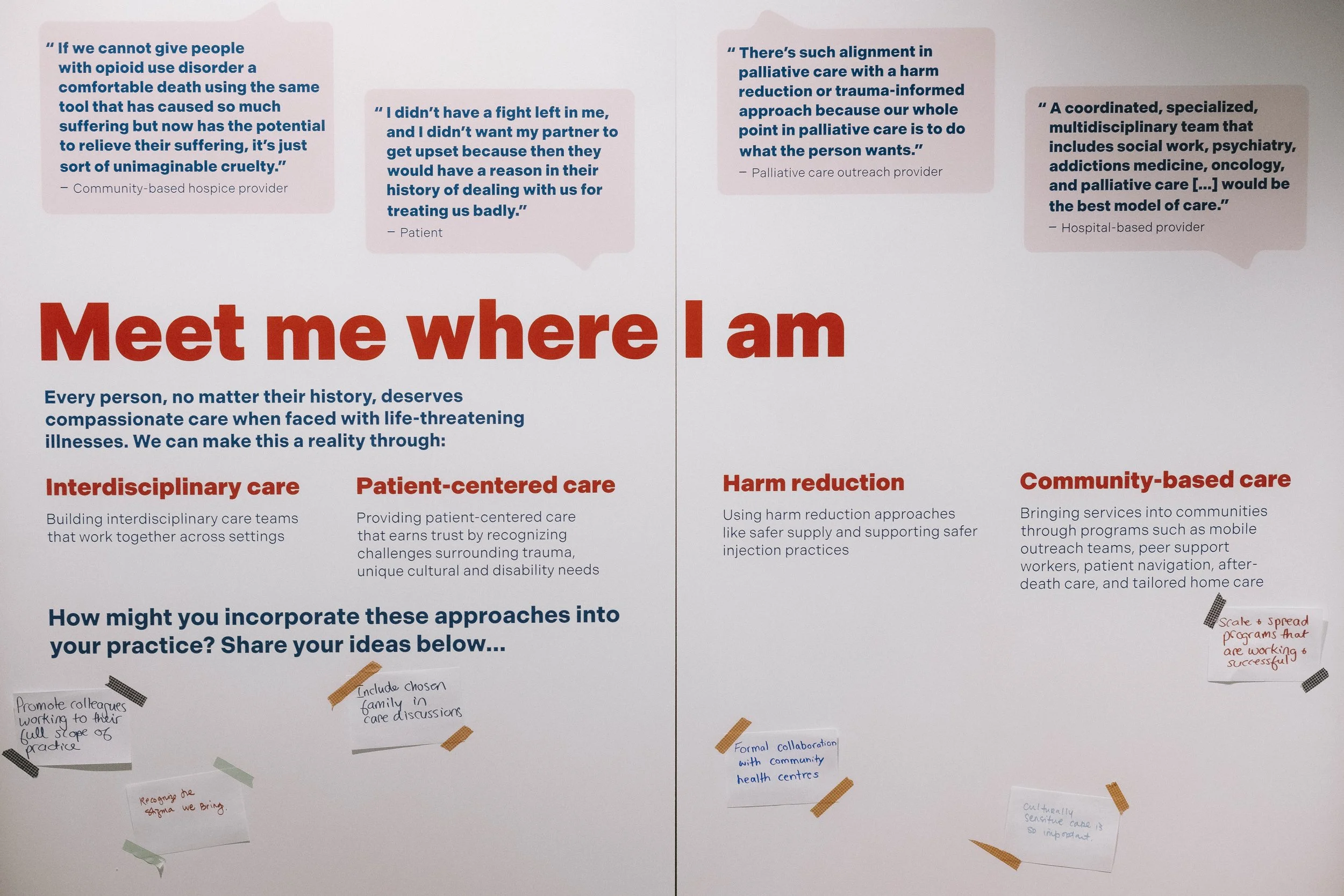
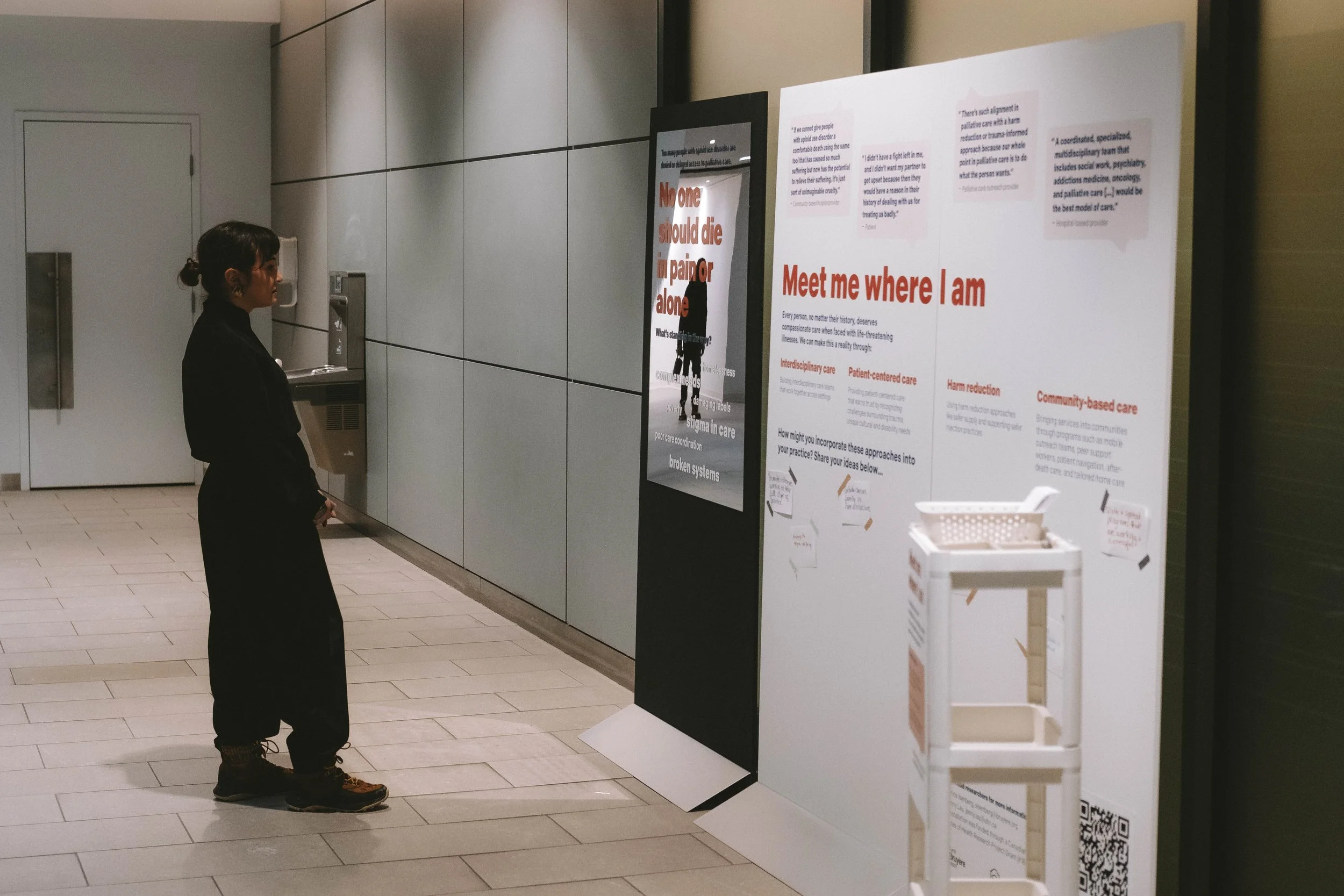
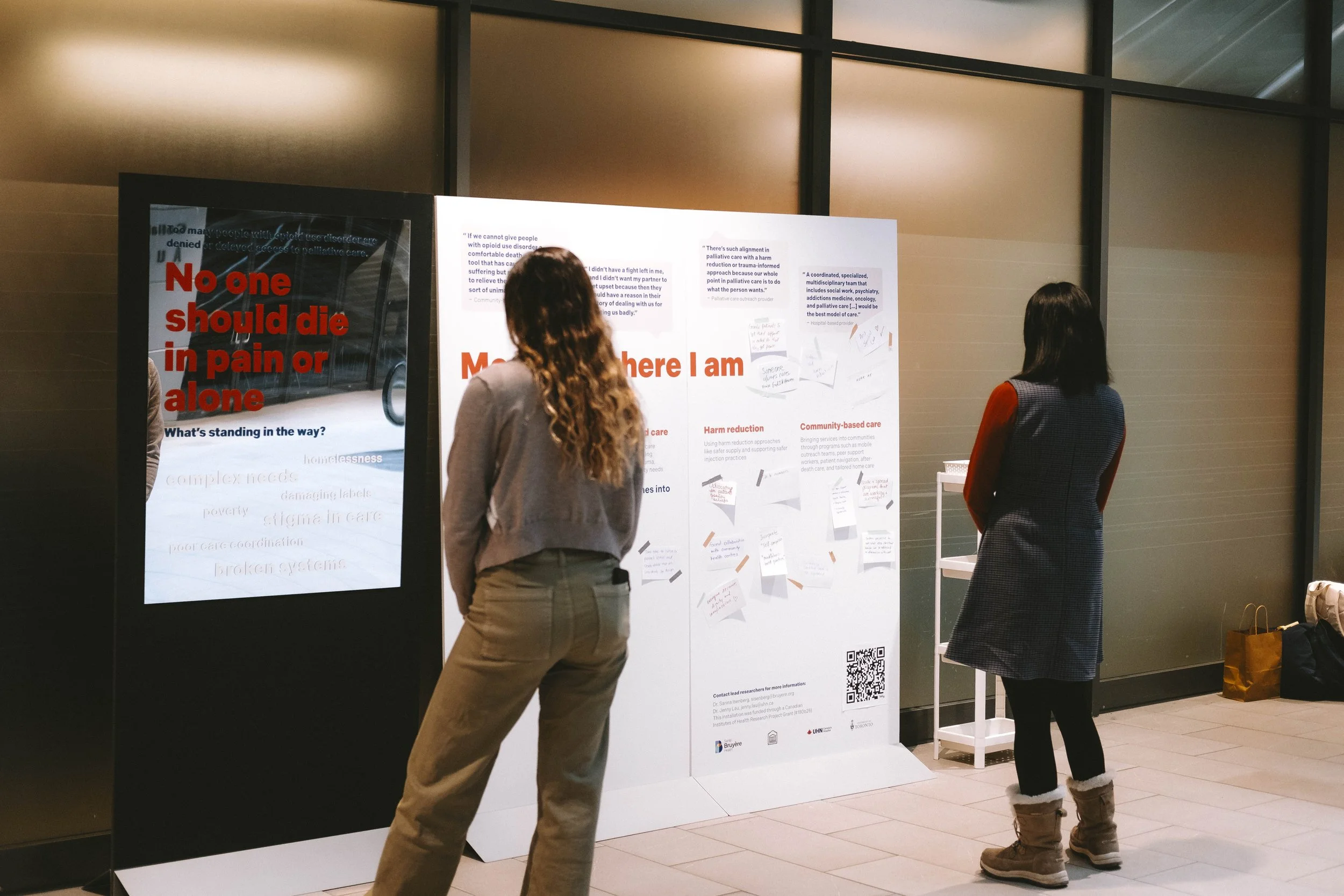
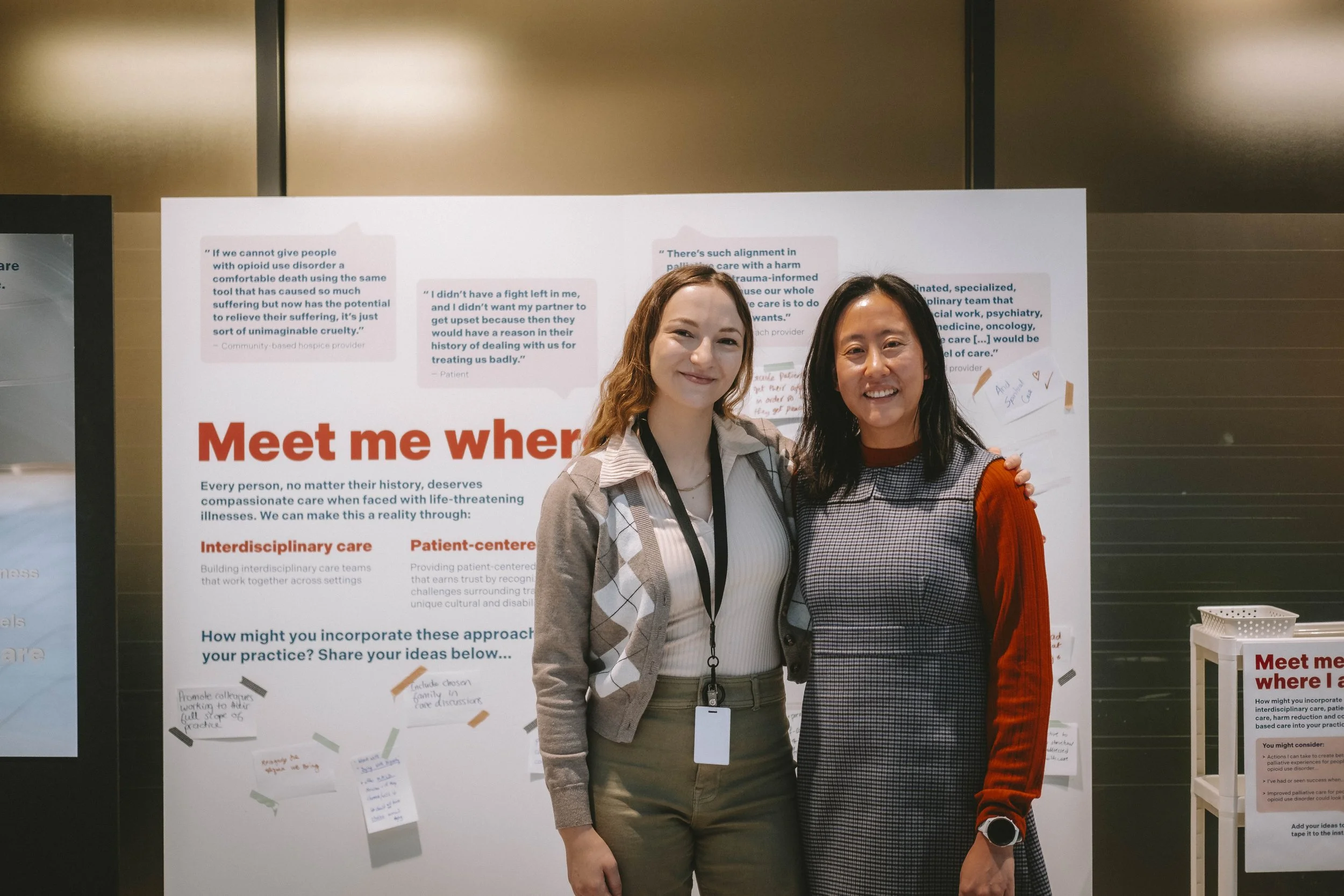
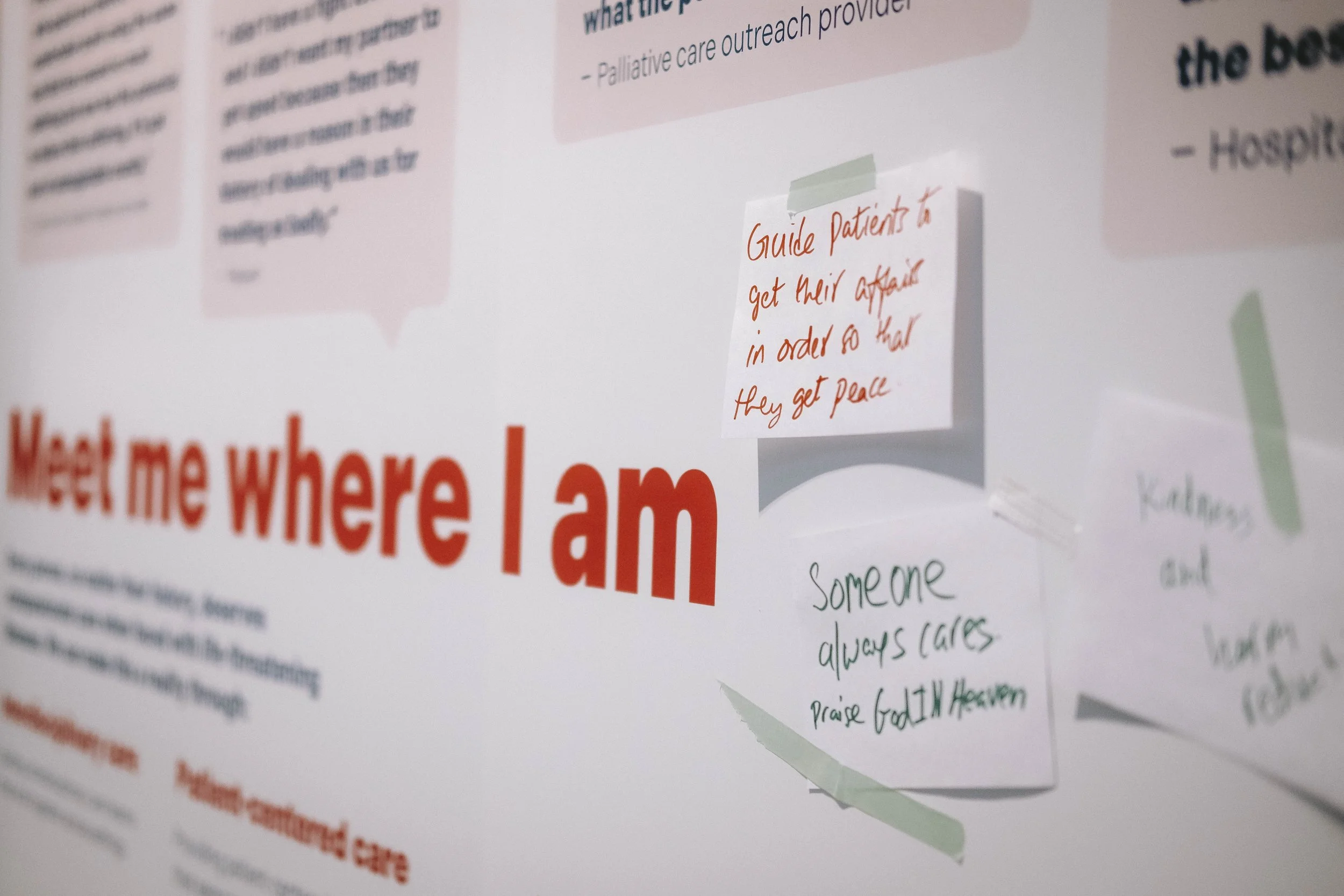
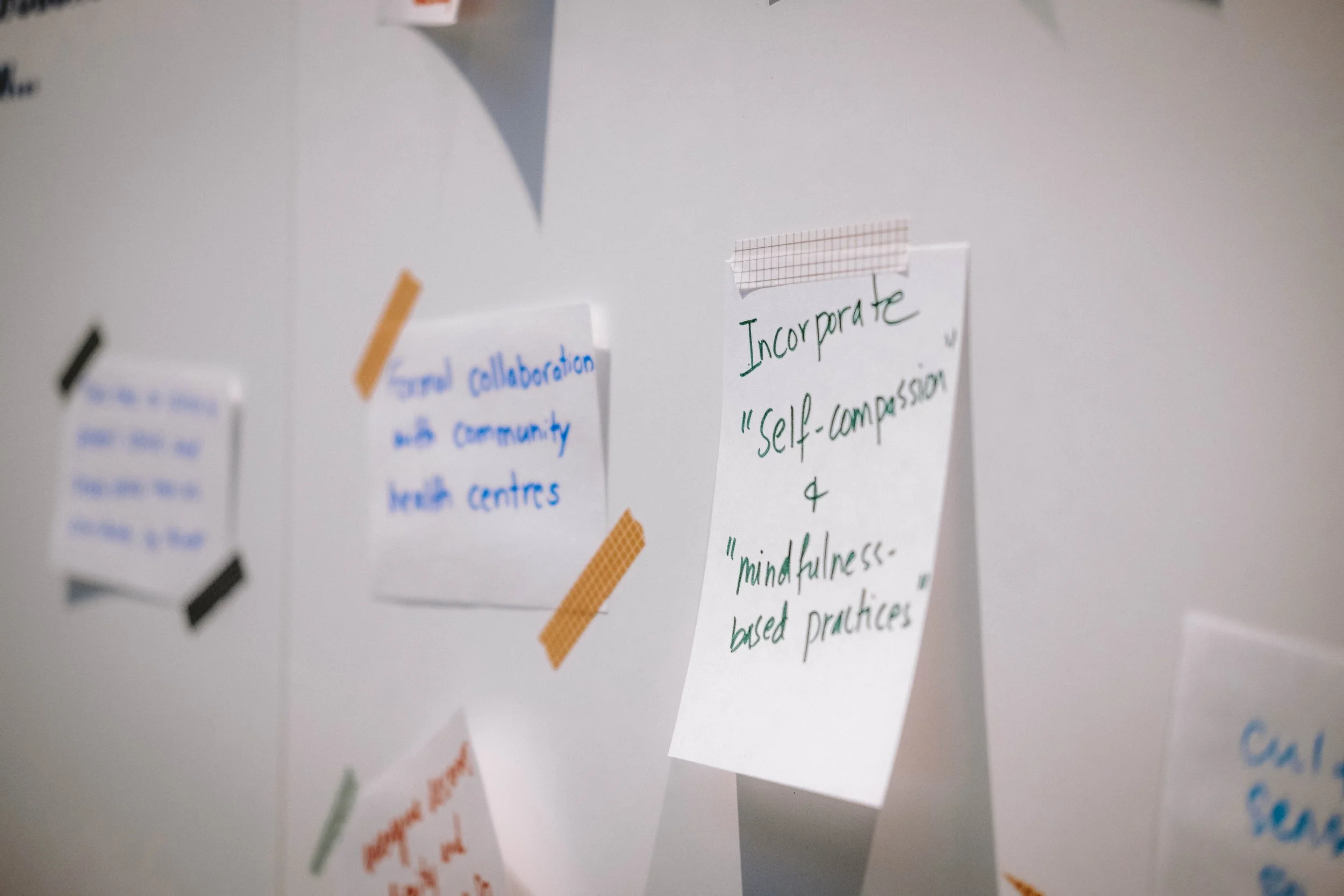
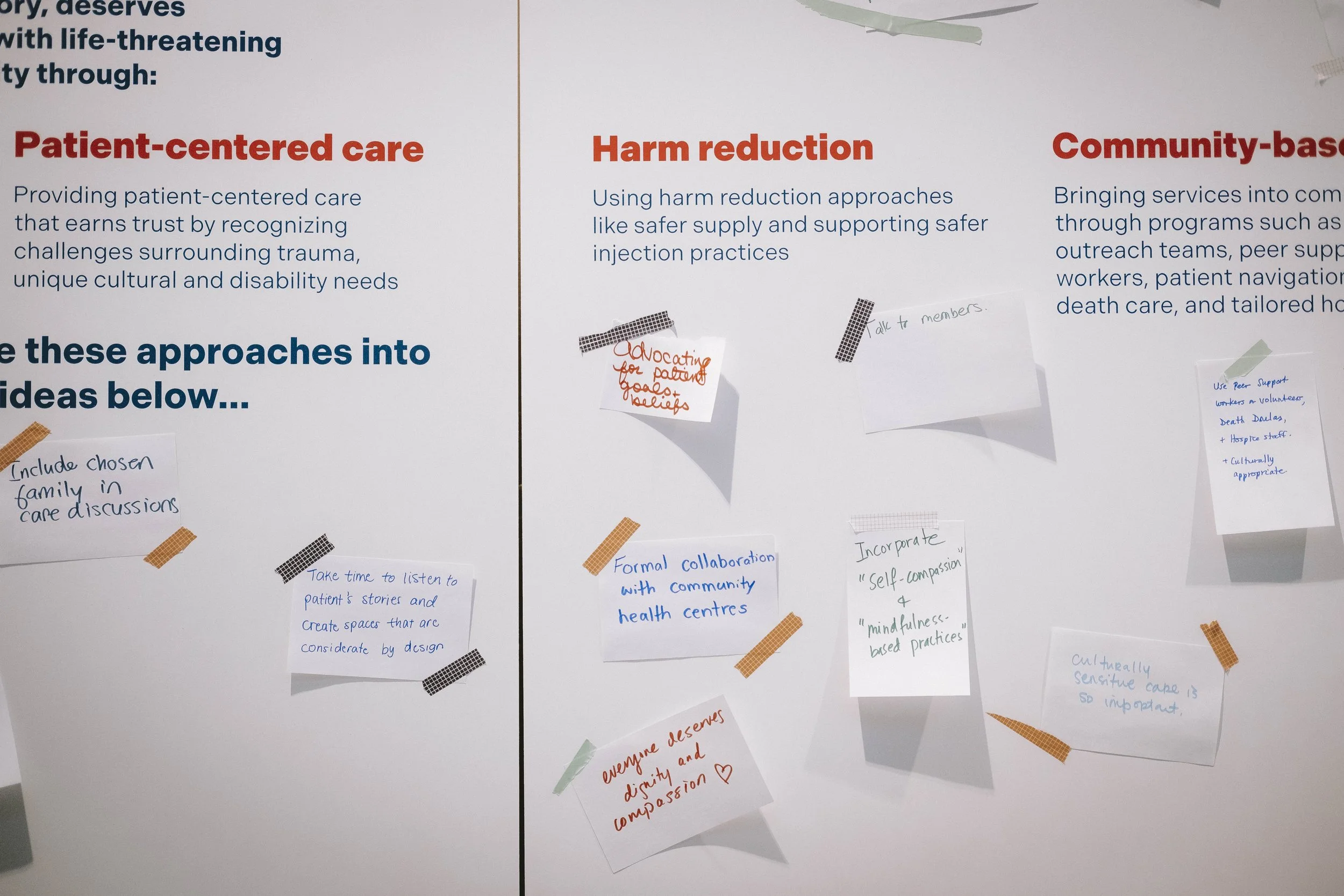
Meet Me Where I Am is a participatory, arts-based knowledge mobilization installation created in collaboration with a design researcher, Karen Oikonen. Drawing on a multi-year mixed methods research program, the installation translates research findings on the end-of-life and palliative care experiences of people with opioid use disorder into an accessible and reflective public experience. Through freestanding panels and interactive elements, the installation invites healthcare providers to learn about the experiences of people with opioid use disorder at end of life, reflect on barriers to accessing palliative care, and consider potential solutions. The work highlights the role of interdisciplinary collaboration, patient-centred practices, harm reduction, and community-based models in improving palliative care for this population. The installation is being exhibited at the MaRS Centre (Lower Concourse) in Toronto from January 26 to January 30, 2026, and is designed to support self-guided participation and dialogue that bridges research and clinical practice.
Funding: Canadian Institutes for Health Research [180628]
Team Members: Karen Oikonen, Sarina Isenberg, Jenny Lau, Lisa Boucher, Rebecca Bagnarol, Andrew McLeod, Sheila Jennings

Glossary of terms used in the installation
Broken Systems refers to fragmented and siloed healthcare and social structures that fail to meet the complex needs of people with opioid use disorder, leading to disparities in access to palliative care at the end-of-life. These system failures manifest as gaps between service sectors, insufficient integration of addiction medicine and palliative care, and structural barriers that contribute to inequitable care and adverse outcomes for people with opioid use disorder.
Harm Reduction is an evidence-based, client-centred approach that aims to reduce the health and social harms associated with addiction and substance use without necessarily requiring abstinence. It emphasizes non-judgmental and non-coercive strategies that provide people who use substances with choice, enhance skills and knowledge, and support safer and healthier lives by focusing on reducing harms rather than eliminating substance use (1).
Trauma is defined as experiences that overwhelm an individual’s capacity to cope. Traumatic experiences can interfere with a person’s sense of safety, self and self-efficacy, as well as the ability to regulate emotions and navigate relationships. Traumatized people commonly feel terror, shame, helplessness and powerlessness. It is very common for people accessing substance use treatment and mental health services to report overwhelming experiences of trauma and violence (5).
Opioid Agonist Therapy (OAT) are medical treatments for people with opioid use disorder that reduce opioid cravings and prevent severe withdrawal symptoms. It involves the supervised use of long-acting opioid medications that act more slowly and for a longer duration in the body, helping individuals reduce or stop opioid use, lower the risk of overdose, and maintain day-to-day functioning without experiencing intoxication or sedation (2).
Palliative Care is an approach to care that improves the quality of life of patients and their families' facing problems associated with life-threatening illness. It prevents and relieves suffering through the early identification, assessment, and treatment of pain and other physical, psychosocial, and spiritual problems. Delivered through a multidisciplinary, person-centred approach, palliative care supports patients to live as actively as possible and provides caregivers with practical, emotional, and bereavement support (3).
Safer Supply refers to the provision of prescribed medications as safer alternatives to the toxic illegal drug supply for people at high risk of overdose. Delivered under the supervision of a health care practitioner, safer supply aims to prevent overdoses, save lives, and reduce drug-related harms while connecting individuals who use drugs to additional health and social services (4).
-
Canadian Mental Health Association (CMHA) Ontario. Harm reduction [Internet]. Toronto (ON): CMHA Ontario; [cited 2026 Jan 5]. Available from: https://ontario.cmha.ca/harm-reduction/
2. Health Canada. Treatment for opioid use disorder [Internet]. Ottawa (ON): Government of Canada; [cited 2026 Jan 5]. Available from: https://www.canada.ca/en/health-canada/services/opioids/opioids-use-disorder-treatment.html#a4
3. World Health Organization. Palliative care [Internet]. Geneva (CH): World Health Organization; 2020 Aug 5 [cited 2026 Jan 5]. Available from: https://www.who.int/news-room/fact-sheets/detail/palliative-care
4. Health Canada. Safer supply [Internet]. Ottawa (ON): Government of Canada; [cited 2026 Jan 5]. Available from: https://www.canada.ca/en/health-canada/services/opioids/responding-canada-opioid-crisis/safer-supply.html
5. Canadian Centre on Substance Use and Addiction. Trauma-informed care toolkit [Internet]. Ottawa (ON): CCSA; 2014 [cited 2026 Jan 5]. Available from: https://www.ccsa.ca/sites/default/files/2019-04/CCSA-Trauma-informed-Care-Toolkit-2014-en.pdf
Participant Reflections of Themes Represented in the Installation